
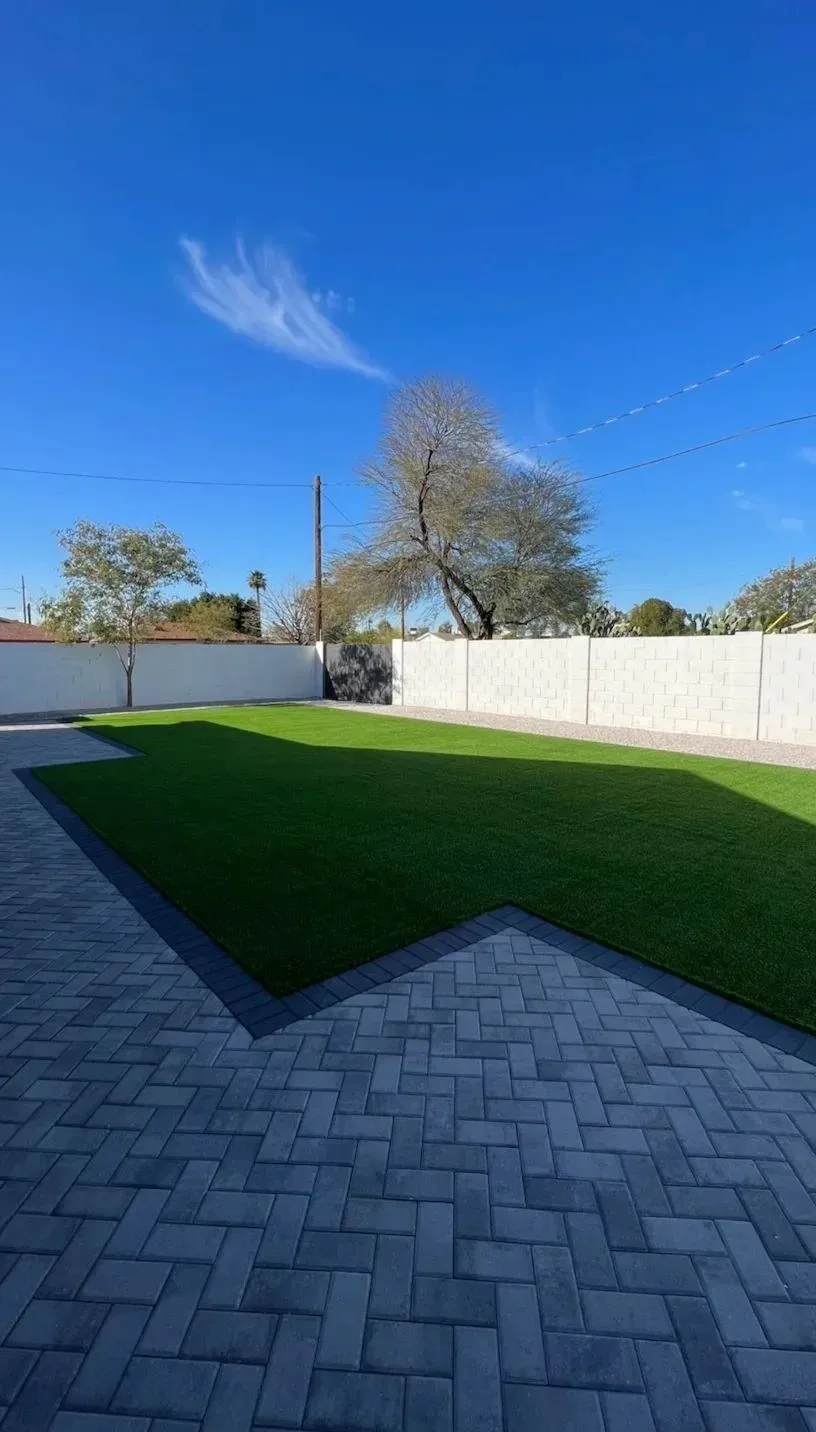
Why Houston Is Unique for Patio Construction
Houston presents two challenges that most cities don't have to deal with at the same level: expansive clay soil and serious rainfall. Understanding both is the key to getting a patio that lasts.
The Clay Soil Problem
Houston's native soil is a heavy, expansive clay that swells when wet and shrinks when dry. This seasonal movement is what causes patios, driveways, and sidewalks to crack and shift over time. It's not the contractor's fault — it's the ground. But a contractor who doesn't account for it with proper base preparation is doing you a disservice.
A properly prepared base is one of the most important factors in a long-lasting patio. Depending on the project, soil conditions, and material selected, this often includes several inches of compacted crushed stone installed in lifts to create a stable foundation.
Houston's Rainfall Challenge
A properly constructed patio should be graded to direct water away from your home's foundation while maintaining positive drainage across the surface. Depending on the property, additional drainage solutions such as channel drains or French drains may also be recommended.
If a contractor's proposal doesn't mention drainage, ask them directly: "How will water drain off this surface and where does it go?" That question alone will separate the professionals from the rest.
Choosing the Right Material for Houston's Climate
Material choice matters more in Houston than in milder climates because of the heat and the soil movement. Here's how the main options perform:
| Material | Heat Performance | Clay Movement Tolerance |
|---|---|---|
| Travertine Pavers | Excellent — stays cool | High — individual pieces flex |
| Concrete Pavers (light) | Good | High — individual pieces flex |
| Stamped Concrete | Moderate | Low — monolithic slab cracks |
| Natural Limestone | Good | High — individual pieces flex |
| Plain Concrete | Poor (absorbs heat) | Low — monolithic slab cracks |
For most Houston homeowners building a primary outdoor living space, we recommend travertine or light-colored concrete pavers. Both tolerate the clay soil movement well because individual pieces can shift and be reset without tearing out the whole surface. They also stay meaningfully cooler than dark concrete on a Houston July afternoon.
The Construction Process: Step by Step
Step 1: Consultation and Design
A reputable contractor comes to your home, walks the space with you, and asks questions about how you plan to use the patio — entertaining, dining, a place for the kids to play. They'll take measurements, assess the drainage situation, and discuss material options. This visit should be free and carry no obligation.
Step 2: Written Proposal
You should receive a written proposal that clearly specifies: the material and grade being used, base preparation depth and method, drainage approach, what is and isn't included, project timeline, and warranty terms. Never accept a verbal-only quote for a project of this size.
Step 3: Permits
Permit requirements vary depending on the municipality and the scope of work. While many patio covers, structural additions, electrical, plumbing, and gas installations require permits, a simple ground-level patio may not. An experienced contractor can help determine what permits are required and handle the permitting process when applicable.
Step 4: Site Preparation
This is where the real work starts. The crew excavates to the proper depth, removes existing grass or surface material, grades for drainage, and compacts the base layers. This phase is as important as everything that comes after.
Step 5: Installation
The surface material is laid according to the approved design. For pavers and travertine, this involves setting in sand, cutting to fit, and filling joints. For concrete, forms are set, reinforcement is placed, and the pour is done in one session. Your contractor will provide a clear schedule for this phase during the project analysis.
Step 6: Finishing and Cleanup
Sealers are applied (for concrete and natural stone), edges are finished, and the site is cleaned up. Most contractors do a final walkthrough with you before considering the project complete.
Questions to Ask Before You Hire
- How deep is your base preparation, and what material do you use? The answer should include crushed stone depth and compaction method — not just "we do a proper base."
- How will water drain off this surface? They should describe slope direction and what happens to the water after it leaves the patio.
- Will you pull permits, or is that my responsibility? It should be theirs.
- Are you fully insured? Ask to see the certificate of insurance.
- Can you show me a completed project similar to mine in Houston? Photos or a site visit to a reference job.
- What does your warranty cover and for how long? Get the answer in writing as part of the contract.
Red Flags to Watch For
- No site visit before a quote: A phone or online quote for a custom patio is not a real quote — too many variables require eyes on the space.
- Pressure to decide immediately: A contractor who gives you a "one-day only" deal is using a sales tactic, not being a professional.
- Requesting full payment upfront: Be cautious of contractors requesting full payment before work begins. A written payment schedule tied to project milestones is generally a more transparent approach.
- No written contract: Every project needs a signed contract that describes the work, timeline, materials, and warranty.
- Skipping permits: If a contractor suggests skipping permits to save time or money, walk away. This protects you legally and when you sell.
Frequently Asked Questions
The timeline depends on the size, materials, design complexity, site conditions, and whether permits are required. After your on-site consultation and project evaluation, your contractor should provide a detailed project schedule outlining the expected start date, construction timeline, and estimated completion.
Permit requirements depend on the scope of your project and the municipality where you live. While many patio covers, structural additions, outdoor kitchens, and projects involving electrical, plumbing, or gas work require permits, a simple ground-level patio may not. Cities such as Houston, Missouri City, Sugar Land, Katy, and Pearland each have their own permitting requirements. An experienced contractor will determine which permits are required, handle the permitting process when applicable, and ensure the project complies with local building codes.
Houston's expansive clay soils and frequent rainfall create unique challenges that aren't as common in many other parts of the country. As the soil absorbs moisture, it expands; during dry periods, it contracts. Over time, this natural movement can contribute to shifting and cracking if a patio isn't designed and installed with proper site preparation. That's why a well-prepared base, proper grading, and quality installation are critical for long-term performance. Houston also receives more than 50 inches of rainfall each year, making effective drainage an important part of any patio design. A properly constructed patio should direct water away from the home's foundation, and depending on the property, features such as channel drains or French drains may be recommended to help manage runoff.
Ask about: (1) base preparation depth and installation method; (2) the drainage plan and how water will be directed away from your home; (3) whether permits are required and who will handle them; (4) proof of general liability insurance and, when applicable, licensed electrical, plumbing, or gas professionals; (5) warranty coverage and terms in writing; and (6) references or completed projects similar to yours. A reputable contractor should be able to answer these questions clearly and confidently while providing documentation when requested.