
What Makes Texas Patios Different
Houston's outdoor conditions are punishing. Summers are intensely hot and humid for months at a time, and the rainfall — often delivered in violent bursts — tests drainage systems to their limits. Add in Houston's notorious clay soil that swells and shrinks with moisture changes, and you have an environment that exposes every weakness in patio materials and installation.
A patio that's "fine" in Phoenix or Atlanta may fail within a few years here. Here's how common materials actually perform.
Travertine Pavers — Our Top Pick for Houston
Performance in Texas heat: ★★★★★
Travertine is our most-recommended material for Houston patios. Travertine generally stays noticeably cooler underfoot than many concrete surfaces, making it a popular choice for patios and pool decks in the Texas heat. It doesn't get slippery when wet, which matters during Houston's frequent rain. And it holds its color beautifully — travertine doesn't fade the way colored concrete does.
The tradeoff: travertine requires periodic sealing and is a premium material. But clients who have it tell us consistently it's the material they'd choose again.
Concrete Pavers — Durable, Flexible, Good Value
Performance in Texas heat: ★★★★☆
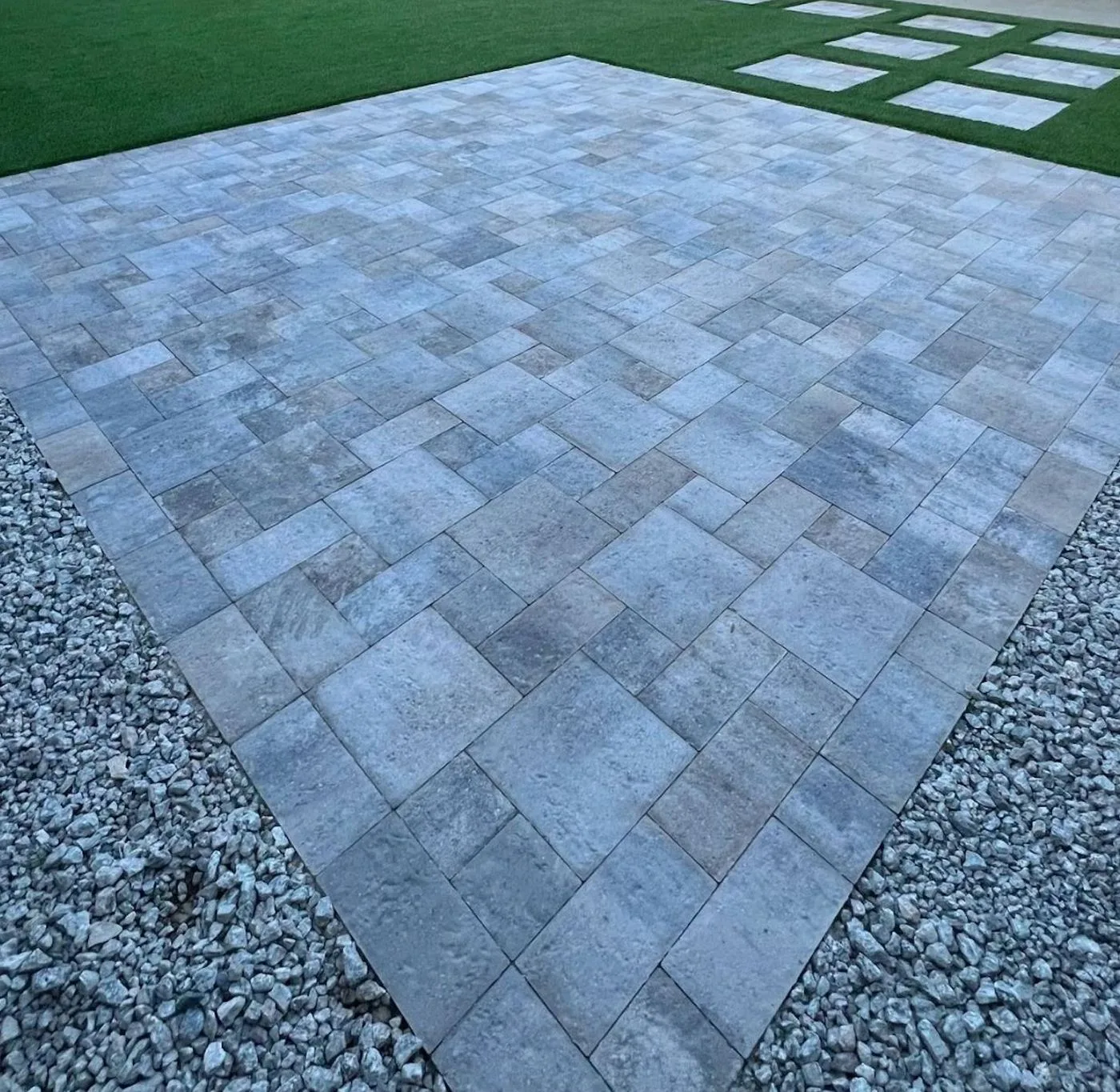
Concrete pavers (as opposed to poured concrete slabs) are our second most popular choice. The big advantage over poured concrete is flexibility: because individual pavers sit in a sand bed rather than a monolithic slab, they can shift slightly with Houston's soil movement and be individually replaced if needed. A cracked slab requires tearing out the whole section; individual pavers can often be repaired or replaced without removing the entire patio surface.
Lighter-colored pavers (cream, buff, light gray) stay considerably cooler than charcoal or dark varieties. Avoid dark-colored concrete pavers in full sun — they can become genuinely painful to walk on barefoot in a Houston July afternoon.
Stamped Concrete — Looks Great, Needs Care
Performance in Texas heat: ★★★☆☆
Stamped concrete is popular because it looks like pavers or stone. It performs reasonably in Texas, but has two vulnerabilities. First, color: the pigments in stamped concrete may experience fading over time with prolonged UV exposure, more so than travertine or natural pavers, and re-staining is a significant undertaking every 5–7 years. Second, cracking: poured concrete is a monolithic slab, so when Houston's clay soil shifts, minor cracking can occur as the concrete responds to natural ground movement. Properly installed control joints minimize this, but don't eliminate it.
If you go stamped concrete, insist on a sealer applied at installation and plan to re-seal periodically. And choose a lighter color palette.
Natural Stone (Flagstone, Limestone) — Beautiful but Demanding
Performance in Texas heat: ★★★★☆
Limestone and flagstone stay cool like travertine and have a natural look that's hard to replicate. Texas limestone specifically is well-suited to the local climate. The challenges: natural stone is more porous than pavers and can absorb stains from outdoor cooking, fallen leaves, and pollen. It requires sealing and more careful ongoing maintenance. And irregular-cut flagstone requires skilled installation — the gaps must be filled and maintained or they become trip hazards over time.
Plain Poured Concrete — Simple but Limiting
Performance in Texas heat: ★★☆☆☆
Plain concrete remains a practical and cost-effective option for many applications, but it generally offers less design flexibility and is more susceptible to visible cracking than segmented paving systems. Dark concrete absorbs heat aggressively. And once it cracks or stains, your options are limited — grind, resurface, or tear out and repour.
We recommend plain concrete primarily for utility areas (garage aprons, side walkways) rather than primary patio living spaces.
Quick Reference: Material Scorecard for Houston
| Material | Heat Tolerance | Cracking Risk | Maintenance | Typical Service Life (with proper installation & maintenance) |
|---|---|---|---|---|
| Travertine | Excellent | Low | Seal every 2–3 yrs | 20–30 yrs |
| Concrete Pavers (light) | Good | Very Low | Minimal | 25+ yrs |
| Stamped Concrete | Moderate | Moderate | Seal every 1–2 yrs | 10–20 yrs |
| Natural Limestone | Good | Low | Seal annually | 20–30 yrs |
| Plain Concrete | Poor (dark) | Moderate-High | Low | 10–15 yrs |
Our Recommendation
For most Houston homeowners building a primary backyard patio or entertainment area, we recommend travertine pavers or light-colored concrete pavers. Both handle the Texas climate gracefully, age well, and look great for years with modest care. Stamped concrete is a reasonable alternative if installed and sealed properly.
Regardless of the surface material you choose, proper site preparation is one of the most important factors in a long-lasting patio. A properly designed base, quality compaction, and effective drainage help create a stable foundation that performs well in Houston's expansive clay soils.